Top Ecommerce Order Management Systems for Scaling Brands in 2026
A practical comparison of five ecommerce order management systems for brands scaling in 2026. Covers Billbee, Xentral, Shopware OMS, native Shopify, and Hive, with verified pricing, feature breakdowns, and a clear decision framework.

Key Takeaways
- An ecommerce Order Management System (OMS) receives, routes, tracks, and processes orders across channels while keeping inventory accurate in real time. The right system eliminates manual work, not just automates it.
- The four criteria that matter most are integration depth, multi-channel support, scalability, and automation. A system that scores well on all four rarely forces a platform migration during growth.
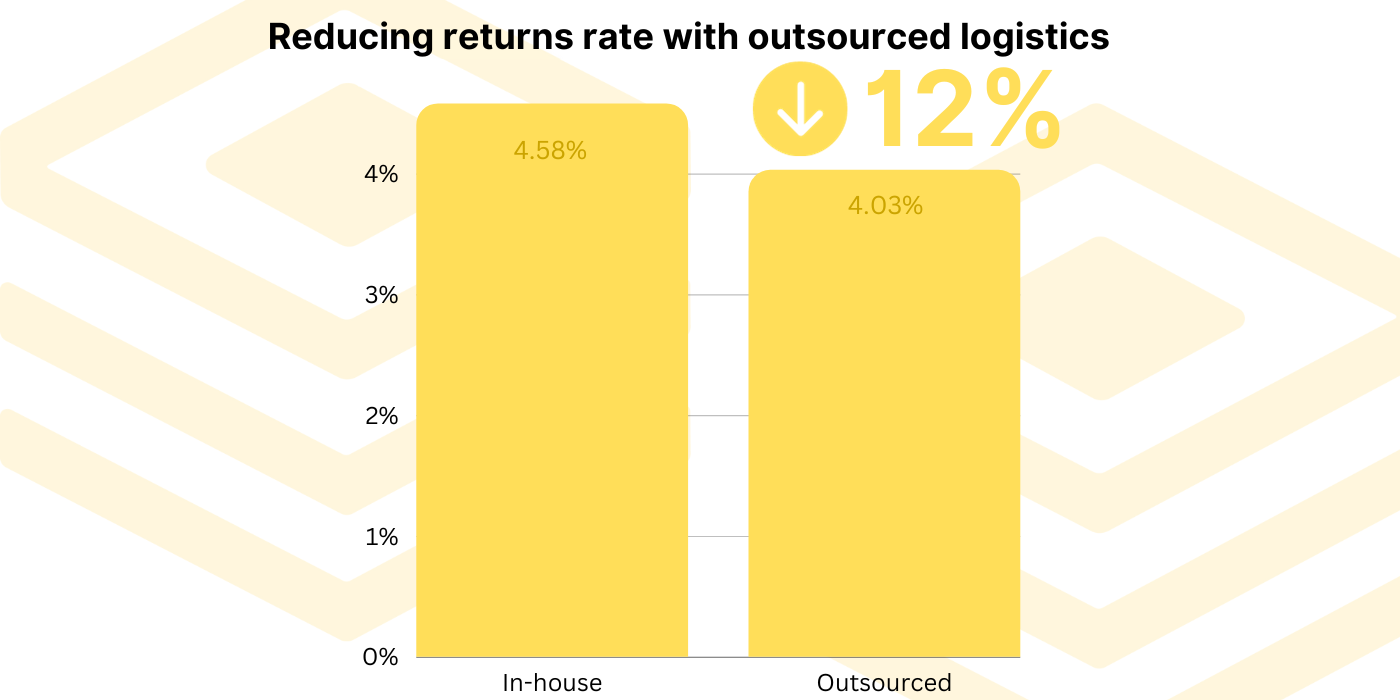
- According to Hive's fulfillment data, connecting order management directly to warehouse execution produces a 99.6% pick and pack accuracy rate and 99.9% delivery punctuality.
- Billbee starts at €9/month and suits smaller multichannel brands. Xentral (from €349/month) is better suited to SMEs that need ERP-level operations in the same stack.
- Native Shopify order management works early on. Most brands outgrow it once routing complexity, B2B workflows, and warehouse operations grow beyond a single node.
As brands sell across more channels, the best order management system is the one that keeps inventory, orders, and fulfillment aligned without adding manual work. That sounds obvious. In practice, most Order Management Systems (OMS) tools handle the software side well and leave the physical execution side to someone else, which is where errors and delays accumulate.
This guide covers the five most relevant OMS options for scaling ecommerce brands in 2026, what each is built for, and how to choose based on your actual operational stage. For a broader look at how order management connects to fulfillment execution, the Hive ecommerce fulfillment guide covers the full picture.
How to Choose an Ecommerce Order Management System (OMS)
Four criteria separate a good OMS from one that will slow you down as you scale.
Integration depth matters more than feature lists. Shallow sync creates brittle workflows and duplicate data entry. A deeper integration means orders, inventory, and fulfillment status move cleanly through one system of record, with no one reconciling spreadsheets at the end of the day.
Multi-channel support becomes essential the moment your brand sells on Shopify, third-party marketplaces, and B2B or retail channels at the same time. An OMS built for a single storefront will show its limits fast.
Scalability means the platform supports rising order volumes, more warehouses, and new channels without forcing a costly migration at the worst possible time in your growth. Read more about what that looks like in practice in Hive's guide to scaling ecommerce fulfillment.
Automation covers the exceptions as much as the routine. A strong OMS should handle order splits, product bundles, stock reallocation, and routing rules without manual intervention. If your team is regularly fixing edge cases by hand, that is a routing logic problem, not a volume problem.
.png)
Platform Profiles: Billbee, Xentral, Shopware OMS, Native Shopify, and Hive
Billbee: Best for Multichannel Order Processing at Lower Volumes
Billbee is a practical, highly accessible multichannel system. Its value is strongest for brands that need consolidated order processing and invoicing rather than advanced warehouse orchestration. The setup overhead is low and the pricing model is transparent, which matters when you are managing operational costs carefully.
Key capabilities:
- Multichannel order and invoicing workflows built into one dashboard.
- A pay-per-order billing structure with no minimum term.
- Automated invoice creation and customizable email rules.
- Unlimited users and shop integrations included at all tiers.
Pricing: Billbee's self-serve model starts at €9/month for the Starter plan (up to 200 orders/month), scaling logarithmically with order volume from there. There is no minimum contract, unlimited users are included at all tiers, and a 30-day free trial requires no payment details.
Xentral: Best OMS-ERP Combo for Scaling SMEs
Xentral sits much closer to a full Enterprise Resource Planning system than a pure OMS. That makes it useful for growing brands that want order management, procurement, warehouse operations, and financial reporting unified in one environment rather than stitched together across separate tools.
Key capabilities:
- Cloud ERP architecture combining CRM, procurement, and warehouse management.
- Over 200 verified integrations via API and Xentral Connect.
- Batch, lot number, and best-before date tracking, relevant for food and cosmetics brands.
- Automated reordering logic based on dynamic minimum stock levels.
Pricing: According to Xentral’s official pricing page, there are five tiers. Launch is €99/month (capped at 1,200 orders/month and €500k annual GMV). Starter, Business, and Pro are priced at €349, €649, and €849/month respectively on annual billing. A fifth Scale tier exists for high-volume operations at custom pricing. All paid plans include unlimited users. Xentral Connect (the integration marketplace with 200+ connectors) is available from the Business tier upward.
Shopware Distributed OMS: Best for Merchants in the Shopware Ecosystem
Shopware OMS is the right choice when your commerce stack is centered entirely on Shopware and you need to route orders across a distributed network of fulfillment nodes, including retail stores that act as local fulfillment points alongside central warehouses.
Key capabilities:
- Pre-connected data flows directly into the Shopware ecosystem.
- Available-to-promise calculations that show real stock across all locations.
- AI-assisted routing that optimizes fulfillment paths in real time.
- Store operations apps that guide retail teams through picking and packing.
Pricing: Shopware offers four tiers, per their official pricing page. The Community Edition is free and open source (MIT-licensed) for merchants under €1M GMV. Rise starts at €600/month, Evolve at €2,400/month, and Beyond at €6,500+/month. Paid plans scale with gross merchandise value. Distributed OMS capabilities and advanced fulfillment routing features are included in the higher tiers.
Native Shopify Order Management: Best Starting Point for Early-Stage Brands
Native Shopify order management is a reasonable starting point. Core order handling is built into the Shopify dashboard, the app ecosystem is extensive, and the setup time is minimal. For a brand running a single channel at manageable volume, it is enough.
The ceiling appears quickly. Once a brand needs deeper routing rules, complex warehouse logic, multi-warehouse coordination, or structured B2B operations, Shopify’s native tools hit their limit. For most scaling brands, Shopify remains the front end while a dedicated operations layer handles backend complexity. Hive’s Shopify fulfillment comparison covers what that handoff typically looks like.
Pricing: Included in standard Shopify subscription tiers.
Hive: Best OMS Tied to Warehouse and Fulfillment Execution
Hive’s order and inventory management is not built as an isolated admin layer. It operates as the connected brain of a broader operations platform, moving from order visibility directly into warehouse execution, multi-carrier delivery, and returns without manual handoffs between separate vendors.
According to Hive’s fulfillment data, this integrated approach produces a 99.6% pick and pack accuracy rate and 99% delivery punctuality across 100M+ items shipped. When order data and warehouse data live in the same system, fewer manual corrections are needed and fulfillment teams move considerably faster.
Key capabilities:
- Real-time order and stock control synchronized across D2C and B2B channels.
- Customizable workflows for order holds, bundles, kitting, and batch management.
- Live restock alerts to prevent stockouts and overselling.
- Deep integrations with Shopify, Gorgias, Klaviyo, and major carriers.
- Returns management built into the same platform. Read more about building an effective returns strategy.
Pricing: Hive uses a commercial fulfillment model that scales with shipment volume. The order management layer is part of the broader operations platform. See Hive’s fulfillment page for details.
Why an Integrated Approach Matters
Order management and physical fulfillment performance are tightly linked. When orders route correctly and stock data is accurate in real time, warehouse teams spend less time correcting exceptions and more time executing.
A standalone OMS hands off to a separate warehouse management system, a separate carrier integration, and often a separate returns tool. Each interface is a point where data can drift. An integrated platform removes those handoffs. To understand how a WMS fits into this picture, Hive’s guide to WMS meaning and benefits covers the distinction in detail.
Selection Framework
Choose Billbee if your priority is affordable multichannel order processing and invoicing with a simple, usage-based pricing structure.
Choose Xentral if you need a broader ERP that covers warehouse management and procurement in the same stack as your OMS.
Choose Shopware OMS if your commerce stack is built on Shopware and you need to route orders across distributed fulfillment nodes, including retail stores.
Choose native Shopify order management if you are early enough that the built-in workflow still covers your operational needs.
Choose Hive if your goal is to run order management as part of a larger operations engine that handles fulfillment, delivery, and returns as a single connected system.
The Bottom Line
The OMS market in 2026 splits clearly by operational stage. Billbee suits brands that want simplicity and low overhead. Xentral suits those who need ERP depth. Shopware OMS fits merchants already inside that ecosystem. Native Shopify works until it does not.
The more important question for most scaling brands is whether they want a standalone OMS or an operations platform that connects order management to physical execution. Standalone systems require more integration work and create more failure points. An integrated approach removes those gaps by design.
If you are at the stage where fulfillment errors are costing money and manual corrections are eating team time, that is the clearest signal you have outgrown a standalone OMS.
Frequently Asked Questions
What is an ecommerce order management system?
An ecommerce OMS is software that receives, routes, tracks, and processes orders across multiple sales channels while keeping inventory accurate. It sits between your sales channels and your fulfillment operations, ensuring every order reaches the right place in the right state.
What features matter most in an OMS?
Integration depth, multi-channel support, scalability, and automation are the four most critical capabilities. An OMS that handles all four without forcing manual workarounds is the one worth investing in.
Is Shopify order management enough for scaling brands?
It works well early on, but most scaling brands outgrow it. Deeper routing logic, multi-warehouse coordination, B2B workflows, and exception handling require a more purpose-built operations layer than native Shopify provides.
What is the difference between an OMS and an ERP?
An OMS focuses on orders, inventory, and fulfillment workflows. An ERP covers a broader range of business functions including procurement, HR, and finance. For a detailed look at how a WMS fits alongside an OMS, Hive’s WMS guide explains the distinction.
How does order management affect fulfillment speed?
Better order data reduces manual exceptions, improves stock accuracy, and lets warehouse teams pick, pack, and dispatch without stopping to resolve data mismatches. The operational impact is measurable, not theoretical.
What is Billbee best for?
Billbee is best for brands that want a reliable multichannel order and invoicing tool with a transparent, usage-based pricing model and no minimum contract.
What is Xentral best for?
Xentral is best for scaling SMEs that want order management as part of a wider ERP system that also handles warehouse operations, procurement, and financial reporting.
How is Hive different from a standalone OMS?
Hive connects software-based order and inventory management directly to physical fulfillment, multi-carrier delivery, tracking, and returns. According to Hive’s fulfillment data, this integration produces a 99.6% pick and pack accuracy rate and 99% delivery punctuality across more than 100 million items shipped.
.png)







.png)



.png)
.png)