The Ultimate DTC Logistics Strategy: How Top Brands Use Fulfillment to Thrive
Customer acquisition costs for DTC brands have risen 60% in five years. European ecommerce hit €842 billion in 2024. Fulfillment speed, return rates, and inventory accuracy now determine which brands survive. Here is how logistics becomes a competitive advantage.

Key Takeaways
- DTC customer acquisition costs have climbed 60% in five years, making first-order profitability the exception, not the rule.
- 84% of UK shoppers won't return to a retailer after a bad returns experience (Klarna), making fulfillment accuracy a direct retention lever.
- The sustainable DTC benchmark is a 3:1 LTV to CAC ratio. Operational efficiency is now the primary path to maintaining it.
- Professional 3PL partners typically deliver order accuracy above 99.8% and cut shipping times by two to three days.
- 55% of ecommerce brands plan to increase 3PL outsourcing, signaling where the industry is heading.
The DTC boom was never supposed to feel like this. A sound DTC logistics strategy used to be an afterthought, something you'd optimize later, once growth had taken care of itself. That's no longer true. Customer acquisition costs are up 60% over the past five years, digital advertising is structurally more expensive across every major platform, and there's no sign of either reversing. European ecommerce hit €842 billion in 2024, up 7% year-on-year, but that headline masks a profitability crisis spreading quietly through the industry. The brands still standing aren't the ones with the biggest ad budgets. They're the ones that figured out fulfillment isn't a back-office function. It's a competitive advantage.
For many DTC companies, the back-end has become the main financial variable. Strong marketing teams still matter, but they can't rescue a business that can't keep inventory moving, absorb returns without bleeding margin, or convert a first-time buyer into a second one without spending another $200 to make it happen.
What is DTC logistics strategy? DTC logistics strategy is the operational system a direct-to-consumer brand uses to move inventory from supplier to end customer, and how well that system protects margin at every step. It covers warehousing, order fulfillment, returns processing, and last-mile delivery. In a high-CAC environment, every one of those decisions directly affects contribution margin, payback period, and customer lifetime value.
The Capital Reset
The DTC playbook was built for a different world. Capital was cheap, customer growth looked like the only problem worth solving, and you could raise money, buy traffic, ship products, and figure out the profit part later. That's no longer a viable argument to make.
Investors have pulled back hard. Equity isn't the default growth mechanism it once was, and many consumer brands have had to find their footing through revenue-based financing, asset-backed lending, and whatever internal cash generation they can manage. Operating discipline, not hype, is what's keeping most brands solvent.
Why Customer Acquisition Cost Changed Everything
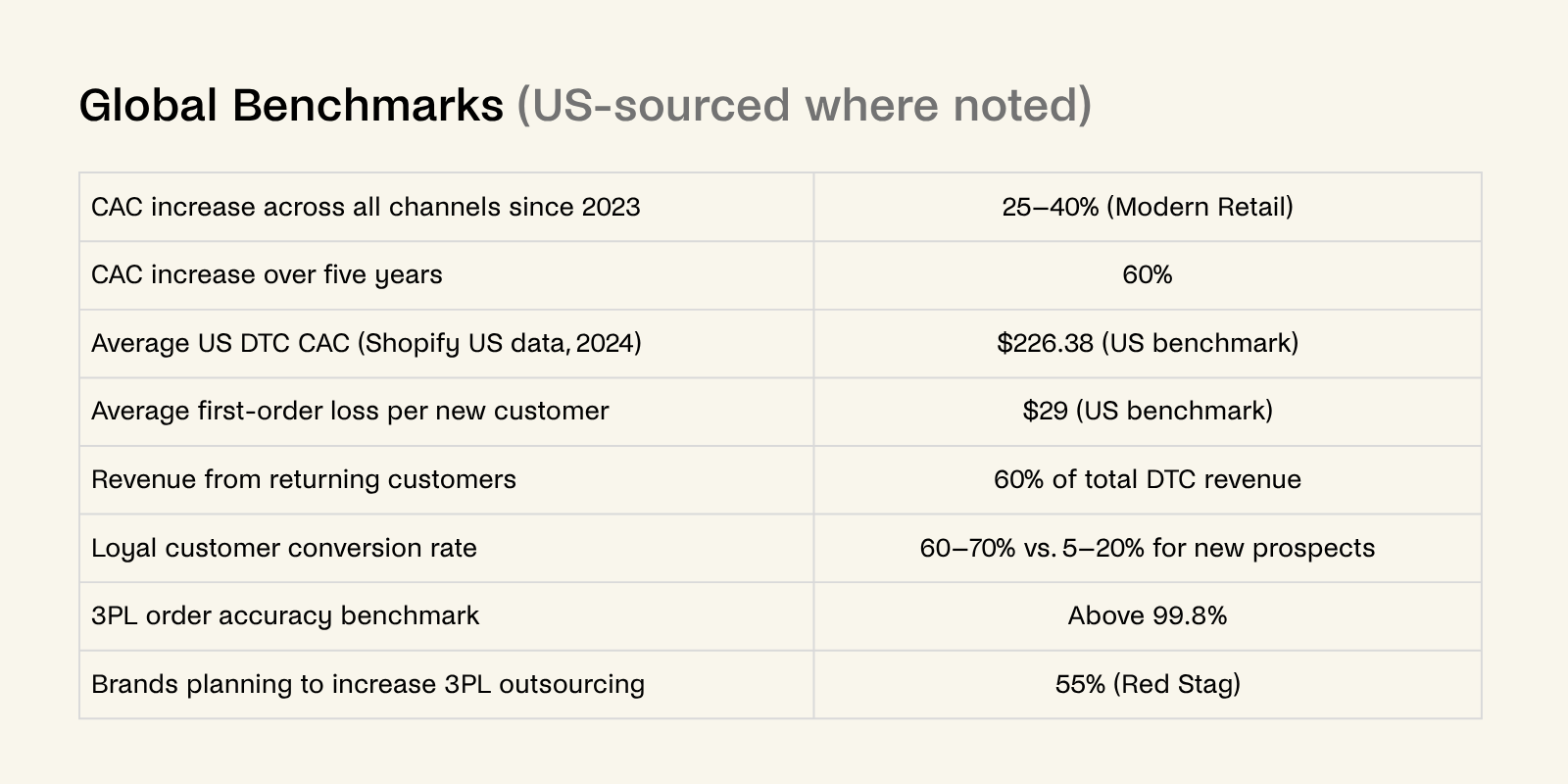
The math stopped working. According to Modern Retail's DTC Briefing, acquisition costs across all channels are up an estimated 25 to 40% since 2023. Google Shopping Cost Per Click (CPC) jumped 33% in 2025. In the US, Shopify data puts the average retail Customer acquisition cost (CAC) at $226.38 in 2024 up 7% year-over-year. European-specific CAC data at that granularity isn't publicly available, but the platform cost inflation is global. If you're running paid acquisition on Meta or Google, you're paying significantly more than you were three years ago, regardless of market.
The knock-on effect is that first-purchase profitability has become the exception, not the rule. US research puts the average first-order loss at $29 per new customer, and the structural logic holds across markets. That flips the whole model toward retention, which is why, according to Rivo's ecommerce retention data, 60% of DTC revenue already comes from returning customers.
A brand that just spent heavily to acquire a customer can't absorb slow shipping, stockouts, damaged goods, or a returns process that costs more than it should. That is exactly why direct-to-consumer fulfillment strategy matters more than ever. Every operational failure chips away at the margin on that customer. In a high-CAC environment, logistics isn't about moving boxes. It protects payback periods and preserves the value of every order shipped.
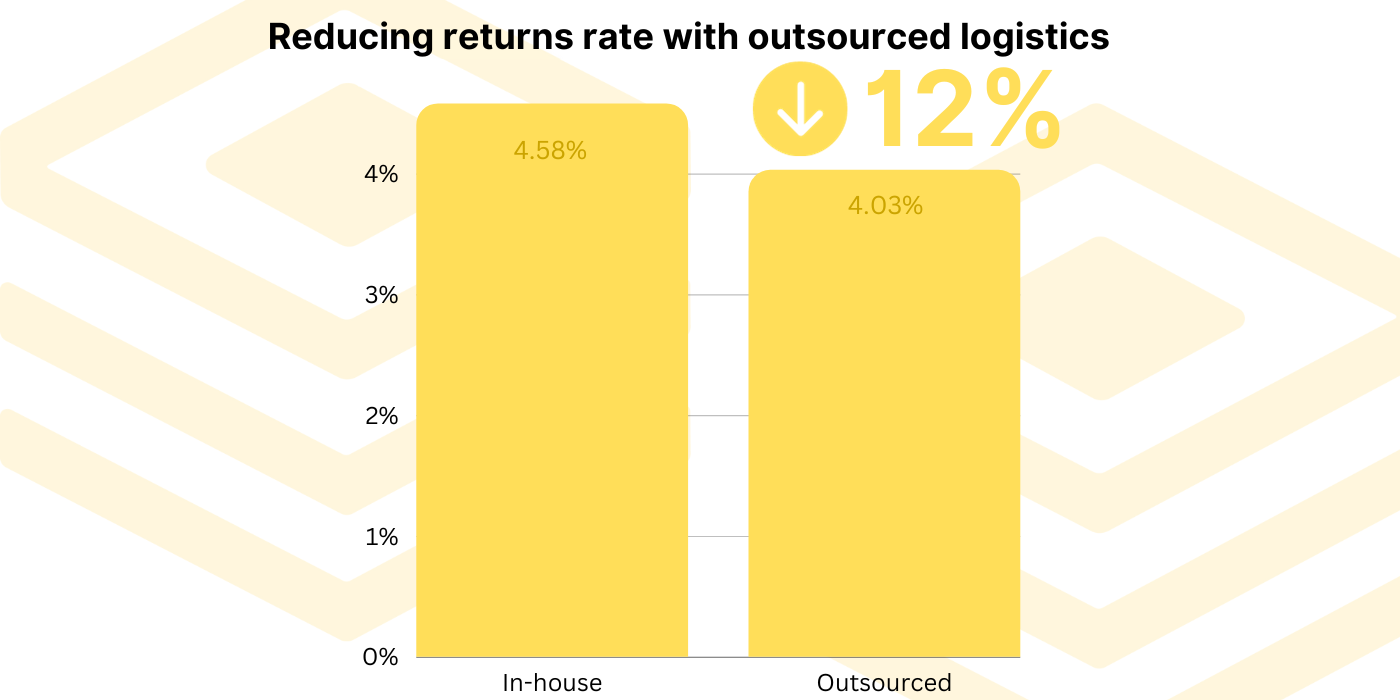
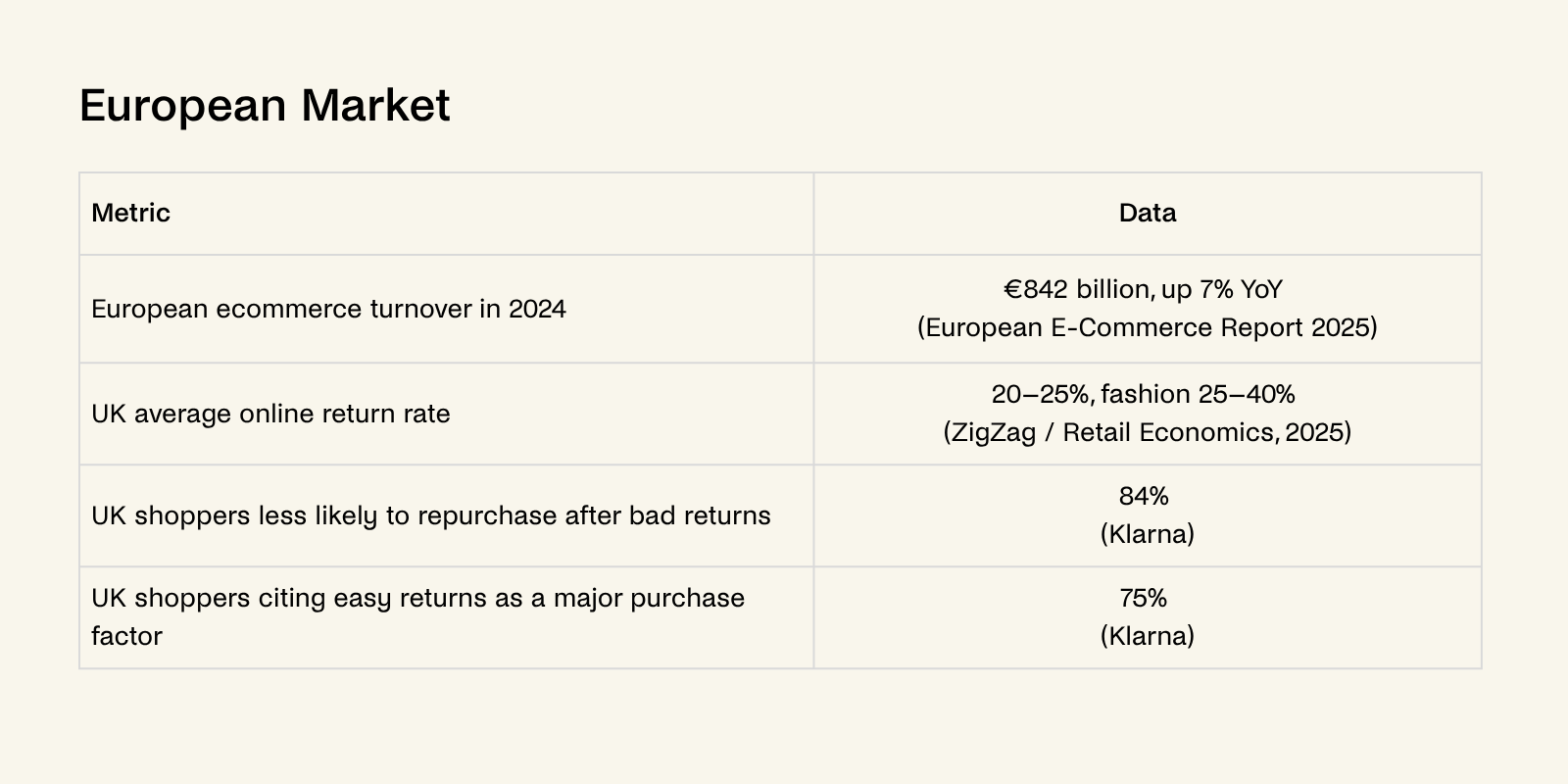
What this means for your business: When acquisition costs are high and first-order margins are thin, a single bad fulfillment event has real financial weight. Industry estimates put the cost of processing a single return at 20% to 65% of the item's original price, depending on category and condition. In the UK, online return rates average 20% to 25%, with fashion running 25% to 40%. Run that across your SKU base and the numbers get uncomfortable fast.
What Winning DTC Brands Are Doing Differently with Fulfillment
The brands still performing are forecasting demand more accurately, placing inventory closer to customers, and picking ecommerce fulfillment partners that can scale without adding a layer of fixed costs they can't get out of. They've stopped chasing revenue for its own sake. Unit economics matter now in a way they simply didn't before.
A few patterns are consistent across the ones getting this right. They build for repeat purchase first, not first-order acquisition, which makes sense when loyal customers convert at 60% to 70% versus 5% to 20% for new prospects. They've made fulfillment accuracy a priority, because service failures in a high-CAC environment are too expensive to absorb. And they're actually using logistics data: to rationalize SKUs, optimize warehouse placement, and tighten replenishment timing.
The outcome is a business that can grow without needing a new funding round to cover the operational waste underneath it.
Logistics as a Competitive Moat for DTC Brands
Fulfillment can be a genuine moat. It doesn't always get treated that way, but it can be. Brands that can reliably deliver, handle returns without friction, and keep inventory consistently available are better positioned to retain customers and protect margins. In categories where product quality across competitors is broadly similar, the post-purchase experience ends up being the thing that actually differentiates you.
The data on returns is hard to argue with. According to Klarna's UK returns research, 84% of shoppers say they won't buy from a retailer again after a bad returns experience. 75% cite easy, free returns as an essential factor in where they shop. Speed, accuracy, frictionless returns. These aren't just service features. They're retention levers.
The operators getting this right are using real-time inventory management and fulfillment data to improve cash flow, not just hit service targets. Faster inventory turns ease working capital pressure. Fewer returns protect contribution margin. Smarter warehouse strategy cuts delivery times without inflating costs. Operational excellence has stopped being invisible. It's become part of what a brand actually promises its customers.
The New Survival Playbook for DTC Brands
The brands that come through this won't be the ones obsessing over growth metrics. They'll be the ones that got the fundamentals right: tighter forecasting, more reliable suppliers, less dead stock, and marketing spend that stays in sync with inventory health. They'll know exactly how long it takes to recover what they spent acquiring a customer, and whether each order is contributing to actual profit or just revenue.
This is where the right logistics partner can make a meaningful difference, not just by handling boxes more efficiently, but by helping brands build a cost structure that holds up under higher CAC without needing another round of funding to compensate. The industry benchmark for a sustainable DTC business is a 3:1 LTV to CAC ratio. In a harder market, operational leverage that helps maintain that ratio is often worth more than the next check.
In-House vs 3PL Fulfillment: Which Wins on Margin?
For most growing DTC brands the real question isn't whether fulfillment matters, it's whether to run it in-house or hand it to a partner. Here is how the two models compare on the things that actually move margin.
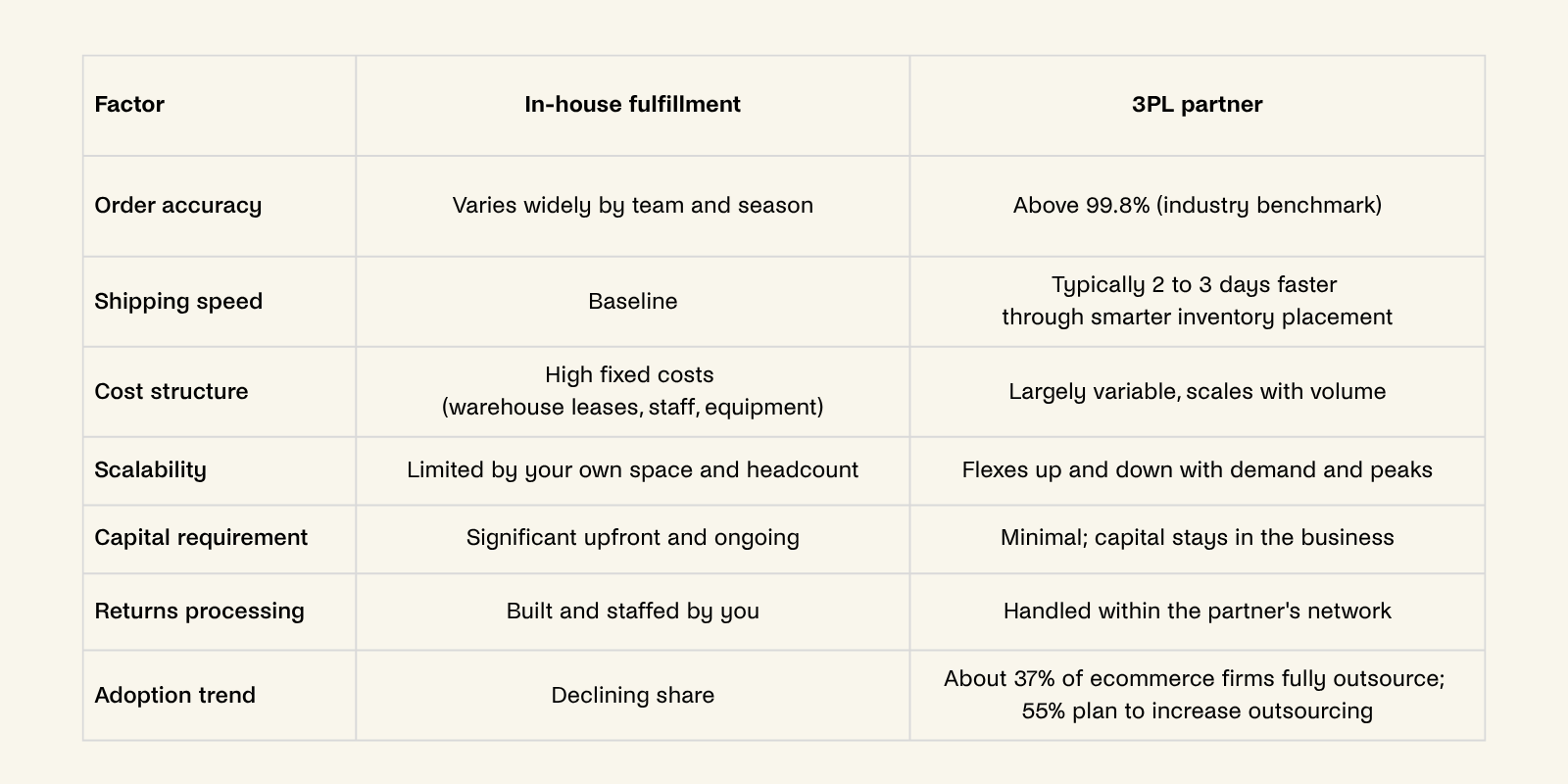
The pattern is consistent: a professional 3PL turns a heavy fixed-cost operation into a variable one, which is exactly what protects contribution margin when acquisition costs are high and unpredictable.
How DTC Brands Can Adapt Their Fulfillment Strategy
Start with an audit. Shipping costs, return rates, inventory turnover, stockout frequency, broken down by SKU and by channel. That view tells you where to store the products, how much safety stock makes sense, and which products are worth putting more marketing behind.
Channel strategy deserves a second look too. A direct-only model carries real risk when paid acquisition is expensive. Most brands need a more balanced mix: owned channels, wholesale, marketplaces, and repeat-purchase programs. Logistics has to support that mix, not fight it. The more flexible the supply chain, the more options a brand has when one channel stops making economic sense.
According to Red Stag's 3PL adoption research, about 37% of ecommerce companies now fully outsource order fulfillment to a 3PL for DTC brands, and 55% plan to increase that outsourcing soon. Professional 3PL operations typically hit order accuracy above 99.8%, and shipping times often improve by two to three days compared to in-house operations.
Key Statistics: DTC Logistics and Customer Acquisition in 2025
FAQ: DTC Logistics and Operational Resilience
Why are DTC brands moving away from VC funding?
Investors now want a clear path to profit, not just top-line growth, and rising acquisition costs have made capital-hungry brands hard to back. VC funding hasn't disappeared, but it's no longer the default growth lever it once was. Customer acquisition costs have risen 60% in five years, and brands that need ongoing capital just to cover rising CAC have become hard sells to institutional investors. Revenue-based lending and asset-backed credit have stepped in for businesses that can demonstrate operational soundness.
Why does logistics matter so much for DTC brands right now?
Because when CAC is high, every operational failure directly eats the thin margin you need to recover what you spent acquiring the customer. A fulfillment failure, a delayed shipment, a return, each one chips away at payback. According to ZigZag / Retail Economics (2025), UK online return rates average 20 to 25%, and industry estimates put the cost of each return at 20 to 65% of the item's price to process. At that scale, logistics accuracy isn't a nice-to-have. It determines whether a brand reaches a payback period at all.
What makes a DTC brand operationally resilient?
Operational resilience is the combination of tight execution and financial discipline that lets a brand grow without raising another round to keep the lights on. In practice that means order accuracy above 99%, low return rates, strong repeat purchase behavior with an LTV to CAC ratio of at least 3:1, tight inventory management, and a capital structure that doesn't depend on the next check.
Is direct-to-consumer still a viable business model?
Yes, but not on the same terms as 2015 to 2021; it now demands real unit economics, retention, and an operational backbone built for today's acquisition costs. According to the European E-Commerce Report 2025, European ecommerce reached €842 billion in 2024, so the demand is clearly there. The question is whether brands can build the cost structure to serve it profitably.
How can a 3PL logistics partner improve DTC profitability?
A good 3PL improves profitability in four concrete ways: lower shipping costs, faster delivery, lower return processing costs, and sharper inventory and marketing decisions from fulfillment data. Lower per-order shipping comes from carrier network scale, faster delivery from smarter inventory placement. Professional 3PLs typically deliver two to three day improvements in shipping time and order accuracy above 99.8%. See how Hive's fulfillment network works.
What is a healthy LTV to CAC ratio for DTC brands?
3:1 or higher is the industry benchmark for a sustainable DTC business. Below 1:1, the model isn't sustainable. Most brands hitting that ratio right now are doing it through retention work, not by finding cheaper acquisition channels.
What is a fulfillment competitive moat?
A fulfillment competitive moat is the operational advantage a brand builds when its logistics is fast, accurate, and cost-efficient enough that the post-purchase experience becomes hard for competitors to replicate. Delivery speed, easy returns, consistent inventory availability, and the data infrastructure that keeps all three reliable at scale, that's what the moat is actually made of.
Closing: Who Survives the Next Phase of DTC
The next phase of DTC won't be won by whoever raises the most money. It'll be won by whoever runs the most efficient operation. For logistics companies, that's a clear opening: help brands turn fulfillment into a margin advantage, and you're not just a vendor. You're part of how they survive.
Treat fulfillment as a cost center and it gets harder to compete every quarter. Treat it as a strategic capability and you can absorb higher acquisition costs, build a post-purchase experience that drives repeat buying, and grow without burning capital on avoidable mistakes. In 2026, that's the whole game.
About Hive: Hive is a fulfillment technology company helping DTC and ecommerce brands across the UK and EU build operational resilience through smarter fulfillment, real-time inventory visibility, and scalable logistics infrastructure. Hive operates fulfillment centers across Europe and gives merchants complete transparency into their supply chain.
.png)




.png)



.png)
.png)